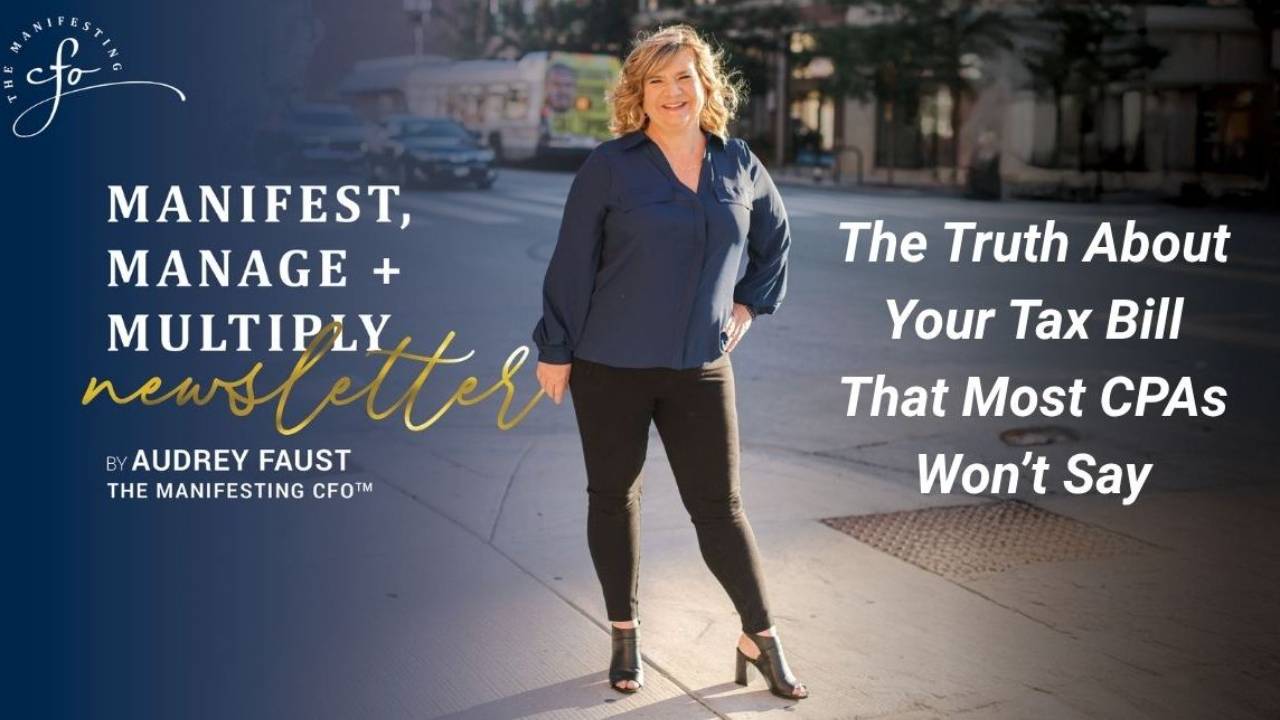
The Truth About Your Tax Bill That Most CPAs Won’t Say
Tax season has a way of pulling back the curtain.
Every year, I find myself in the same kinds of conversations with clients, with colleagues, sometimes with people I meet casually who happen to mention their business finances. And every year, I see the same patterns repeating. Smart, capable people who have been quietly misled about what profit actually means, what taxes actually mean, and what kind of financial structure their business truly needs to grow.
I want to be clear about something before we go further. I stepped away from tax preparation years ago, intentionally. I wanted to be available to my clients year-round, not disappear during the season when strategic conversations matter most. What I do now is financial strategy and profit planning. I work alongside CPAs, not in place of them. But in over two decades of reviewing financials, I’ve had a front-row seat to what most tax conversations miss entirely, and that’s what I want to talk about today.
What makes my perspective different is that I’ve lived on both sides of this work. I understand taxes because I’ve done them. I understand growth strategy because I’ve helped businesses scale from multi-six to multi-seven figures. And I know that at this level, a bookkeeper and a CPA are not the only people you need on your team. What most CFOs miss, and what I’ve made the centerpiece of my work, is the relationship with money itself. The hidden mindset that every business owner is carrying quietly beneath the surface, often without realizing it, that is shaping every financial decision they make. The numbers don’t lie, but the story we tell ourselves about those numbers determines everything. That’s the piece most financial professionals never see, let alone address.
And nowhere is that relationship more charged than when it comes to taxes.
Here’s something I’ve never said publicly before. One of the reasons I stopped doing tax preparation was that I hated delivering the news. Telling someone they owed money was genuinely uncomfortable for me. I dreaded it. And I know I’m not alone in that, because most CPAs dread it too. Nobody wants to be the person on the other end of that conversation.
But here’s what that discomfort quietly does when it goes unexamined. It gets projected. When a CPA tells you that you’re making too much profit and need to spend more, they’re not just offering a tax strategy. They’re bringing their own relationship with taxes into your business. Their discomfort with delivering a tax bill is shaping the advice they give you. Instead of flipping the script and helping you celebrate that you were profitable enough to owe taxes in the first place, they hand you a shovel and tell you to spend it down. And many business owners, because they share that same discomfort around taxes, take the shovel without question.
We all have a relationship with taxes. Most of us were raised to believe that owing money to the government is something to be avoided, minimized, even ashamed of. That belief lives in us. It lives in our CPAs. And when it goes unexamined, it drives financial decisions that quietly undermine the very business we’re working so hard to build.
There is a significant difference between smart reinvestment and spending profit down to zero simply to avoid a tax bill. The businesses I see that consistently struggle, the ones deep in debt, unable to pay their team, unable to pay themselves, unable to figure out why nothing is working, are often the ones who took that shovel year after year. They eliminated the very thing that makes a business viable, and they did it with their CPA’s blessing.
Profit is not a punishment. Taxes are not evidence that something went wrong. They are evidence that something went right. And the moment you can genuinely receive that, the moment that lands not just intellectually but emotionally, everything about how you lead your business begins to shift.
So whether your tax bill felt too high this year or surprisingly low, both are worth examining. A high bill may mean there are structural changes worth exploring in how your business is set up, and next week I’ll be going deeper on exactly that. A low bill driven by zero profit means something far more important needs attention. Either way, the answer isn’t to look away. The answer is to understand what the numbers are actually telling you, and to separate that truth from the emotional relationship with taxes that has been quietly running the show.
The shift I work toward with my clients is moving away from reactive tax avoidance and toward proactive profit planning. When you build a Profit Plan, a clear and intentional structure that accounts for how your business earns, spends, and retains profit, there are no surprises at year end. You know before your CPA ever calls what the tax picture looks like. You understand your numbers because you’ve been in relationship with them all year, not just when someone hands you a form and asks you to sign it.
This is what separates the business owner who is always scrambling from the one who is building something. Profit allows you to pay yourself well. It allows you to reinvest intentionally. It allows you to build a team without terror. It allows you to create real wealth, not just revenue that passes through your hands and disappears.
Planning for profit isn’t about being rigid or fearful around money. It’s about stepping fully into the role of CEO. It’s about making decisions from clarity instead of from a bank balance, and understanding that every dollar of profit you keep and steward well is a dollar working toward the life and business you actually want.
Taxes are part of that picture. They always have been. The question is whether you’re paying them because you planned for profit, or avoiding them because you didn’t.
The only CFO-trained strategist who helps multi six-figure women business owners scale into the role of a seven-figure CEO by mastering their numbers and their relationship with money.
Let's Stay Connected
....................
Would you like a little more inspiration delivered to your inbox every week?
If you're a multi-six to seven-figure business owner who has been avoiding your own numbers, you're not alone, and you're in the right place. Subscribe to my newsletter for weekly stories and insight that helps you move from financially phobic to financially powerful.
Unsubscribe anytime, no hard feelings.